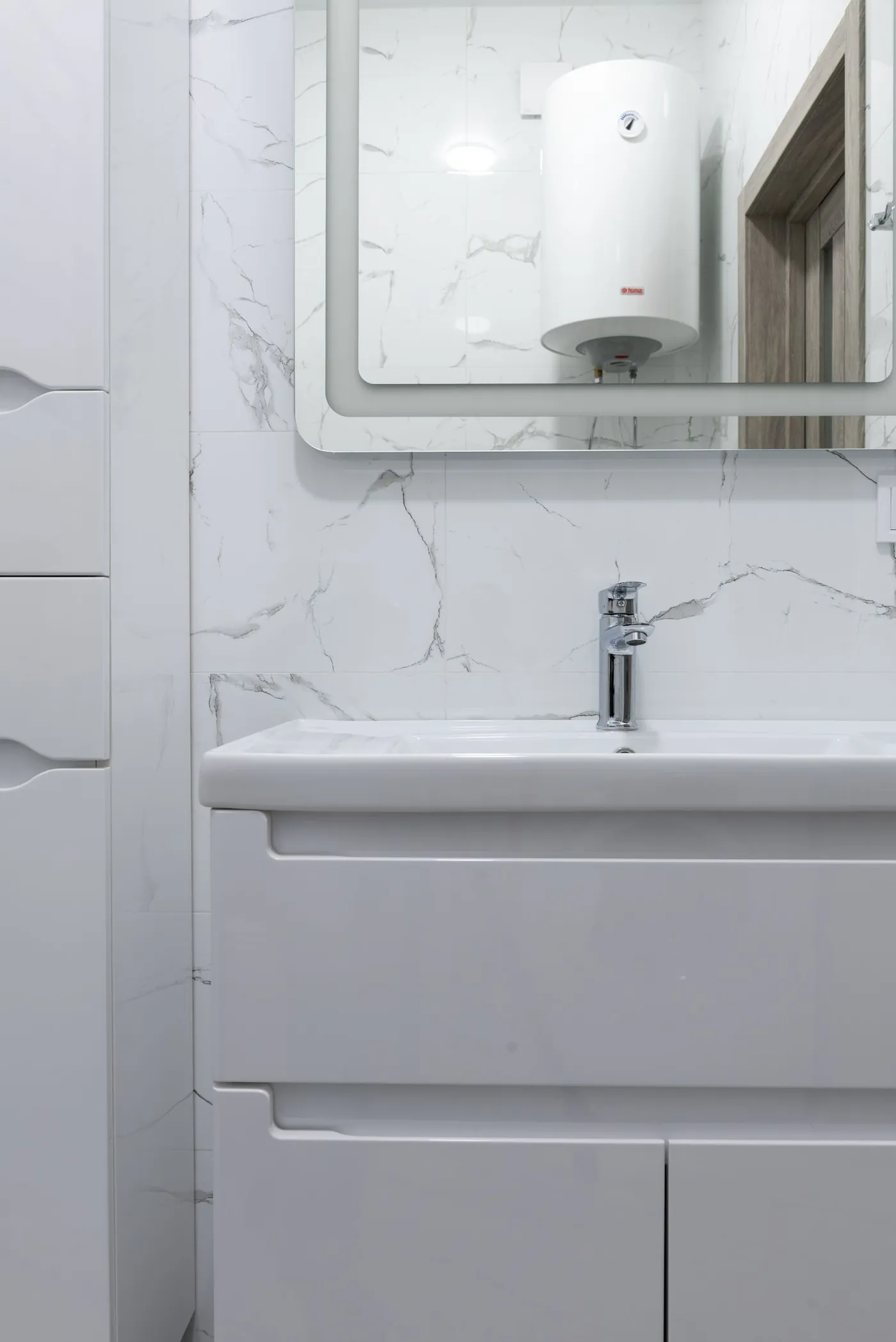
Bathroom with a water heater reflected in the mirror

Troubleshooting guide

No Hot Water in Your Pflugerville Home? Start Here

Work the checks in order — power, settings, pilot, parts — and most no-hot-water problems identify themselves. This guide covers electric, gas and tankless units, and tells you plainly where DIY stops.

Electric, gas & tanklessSafety steps firstWhen to call a pro

⚠ First, the make-safe steps

Active leak: turn the cold-water shut-off above the heater clockwise, then cut the energy — breaker OFF for electric, control knob to OFF for gas. Gas smell: don't touch switches or relight anything; get out, then call your gas utility or 911 from outside. Steam or a hissing T&P valve: keep clear of the discharge and cut the energy source. Everything below assumes none of those are happening.

No hot water — the 60-second version

Short answer: check the breaker (electric) or pilot (gas) first, then the temperature setting, then whether the problem is the whole house or one fixture. Whole-house and sudden usually means the heater. One fixture usually means that fixture. If the basics don't restore it, the cause is a part — element, thermostat, thermocouple, valve or a tankless fault code — and parts need testing, not guessing.

Work It in Order: Causes, Signs, Next Steps

1. Power or fuel is interrupted

Signs: totally cold water, unit silent. Check: breaker position on electric units; pilot window on gas. Next: reset a tripped breaker once; relight a pilot once. If either trips or dies again, that's a fault — see below.

2. Upper element or thermostat failed (electric)

Signs: no hot water at all, breaker fine. Why: the upper element heats the top of the tank first; when it dies, nothing heats. Next: this is meter-testing territory — electric repair page.

3. Lower element failed (electric)

Signs: some hot water, then it runs out fast. Why: only the top of the tank is being heated. Next: same test, lower element. Often found coated in scale in Pflugerville water.

4. Thermocouple or gas valve (gas)

Signs: pilot won't stay lit, or burner never fires. Why: the thermocouple can't prove flame, or the valve has failed. Next: thermocouple is a small part; valve work is professional-only.

5. Tankless fault code

Signs: unit displays a code; water cold or swinging. Why: commonly scale, ignition or flow faults. Next: note the code — it names the fault family. See the tankless page.

6. The tank itself has failed

Signs: water pooling under the unit, rust at the base, rumbling like a kettle. Why: the vessel is corroding through; parts won't save it. Next: shut it down and plan a replacement.

Gas owners

The Wrong-Fuel Problem: When a Heater Doesn't Match the Gas Supply

A real case from a Pflugerville-area homeowner forum: a house plumbed for natural gas had a heater set up for liquid propane (LP) installed. It matters more than it sounds — LP and natural gas run at different pressures and need different orifices and settings.

A heater burning the wrong fuel can soot, overheat, produce carbon monoxide and destroy itself — and no adjustment dial fixes it. The rating plate on the unit states the fuel it was built for; the supply type is confirmed with your gas utility's records.

If there's any doubt about a heater's fuel match — a new home, a replaced unit, a conversion someone mentioned — don't run it on hope. Have the plate and the supply checked before the unit is used. This is a utility-and-professional check, never a DIY experiment.

Not quite cold?

Lukewarm Water and a Heater That Keeps Shutting Off

Lukewarm at every tap usually means the thermostat is set too low (aim for 120°F), the lower element or the dip tube has failed — a broken dip tube lets incoming cold water mix at the top of the tank — or sediment is insulating the bottom of the tank from its heat.

Shutting off repeatedly points at protection doing its job: a tripping high-limit on electric units, an overheating scaled heat exchanger on tankless units, or a gas unit losing flame. A heater that keeps shutting off is reporting a fault, not being temperamental.

Discoloured water only in the hot taps usually means tank sediment or a spent anode rod. Discoloured everywhere, especially after city work nearby, is a supply matter — flush a cold tap first and call the city if it doesn't clear.
Questions, answered

No-Hot-Water FAQs

Resets, pilots, flooding and gas smells — the urgent questions, with the safe answers first.

Call (512) 675-8609

What are the most common causes of no hot water in a house?

In order of likelihood: a tripped breaker or tripped high-limit reset on an electric unit; a failed upper heating element or thermostat; a pilot light out on a gas unit, usually from a worn thermocouple; a failed gas control valve; and, on tankless units, a scale or ignition fault shown as an error code. Work through the checks in this guide in order — power and settings first, parts second — because the most common causes are also the cheapest.

How do I reset my water heater, and why does it keep tripping?

On an electric tank, the reset is the red high-limit button on the upper thermostat, behind the upper access panel — with the breaker off before you open anything. Press it once, restore power, and wait. If it trips again, do not keep resetting: repeated tripping means a fault, usually an element shorted to ground or a thermostat stuck closed, and each reset re-energises it. On a gas unit there is no reset — a pilot that won't stay lit points at the thermocouple or gas valve.

Why does my gas water heater pilot light keep going out?

The thermocouple is the first suspect: it's the small sensor that proves the pilot flame exists, and when it wears out it shuts the gas off as if the flame were gone. Other causes are a dirty pilot orifice, a downdraft blowing the flame out (a venting problem), and a failing gas control valve. A thermocouple is an inexpensive part; a valve is a professional-only replacement. If you smell gas at any point, skip the troubleshooting and follow the safety steps on this page.

What should I do if my water heater is flooded or surrounded by water?

Treat it as stop-and-make-safe first, diagnosis second. Turn the water supply to the heater off, then the energy source — breaker off for electric, gas control to OFF for gas — because a flooded unit's controls and wiring can't be trusted. A heater that has been submerged or had water over its controls should not be put back into service until it's been inspected; internal controls and insulation are usually compromised. Then call us: we'll assess honestly whether it's a repair or a replacement, and document the damage for your insurance — policies typically cover sudden water damage, not the heater itself.

What should I do if I smell gas near my water heater?

Stop troubleshooting and act: don't touch electrical switches, don't try to relight anything, and don't use a phone near the smell. Get everyone out of the house, then call your gas utility's emergency line or 911 from outside. Only once the utility has cleared the scene should the heater itself be looked at. A gas smell is never a wait-and-see problem, and no repair is worth guessing about it.

Pflugerville Water Heater Pros

Worked the checks and still cold?

Tell us what you found — breaker, pilot, code or leak — and we'll take it from the right step, not from the top.

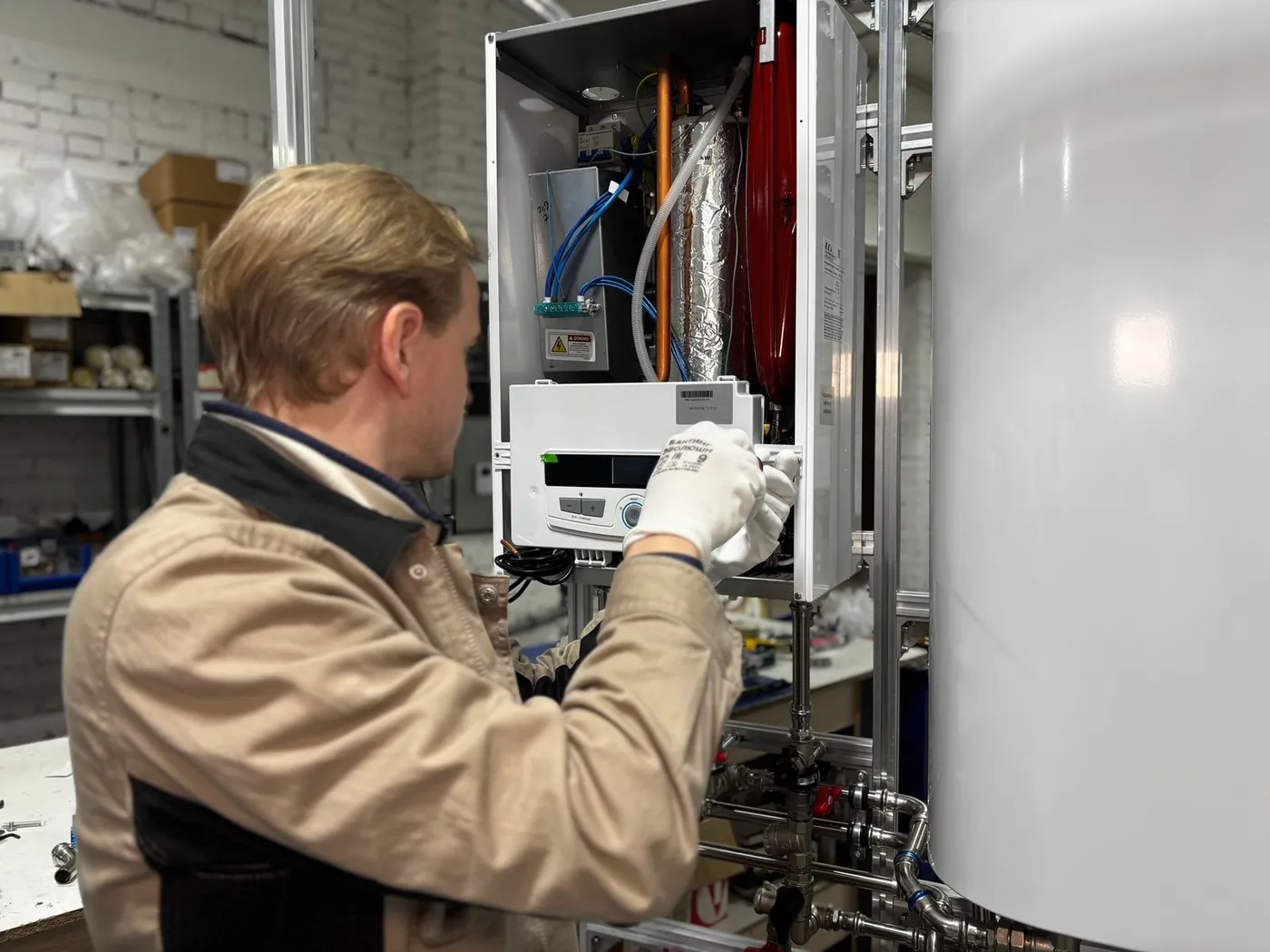
Technician servicing a wall-mounted tankless water heater

Illustrative photo

Call (512) 675-8609