Local water, measured
Pflugerville Water Hardness: What 168 mg/L Does to Your Water Heater
Pflugerville's water is officially hard — 168 mg/L on the city's own 2024 wholesale data sheet. Here's what that number does inside a water heater, and the defences that actually work.
How hard is Pflugerville's water?
Short answer: 168 mg/L as CaCO3 (about 9.8 grains per gallon), from the City of Pflugerville's own 2024 wholesale water-quality data sheet, published through the Manville WSC consumer confidence reporting the city's purchased water feeds into. The USGS classifies 121–180 mg/L as hard water — Pflugerville sits squarely in that band, near its top. The city's supply comes from Lake Pflugerville and the Edwards Aquifer (public water system TX2270014), and aquifer-fed water is exactly the kind that carries dissolved limestone minerals.
You'll see other numbers quoted for Pflugerville online. Prefer the city's own filed figure — it's the one measured on the supply itself.
Inside the tank
What Hard Water Does to a Water Heater
Heat is what turns dissolved minerals into solid scale. In a tank, the minerals settle as sediment on the bottom — the layer behind the rumbling and popping noises — where it insulates the water from the burner or elements and overheats the tank floor.
On electric elements, scale coats the surface directly, trapping heat until the element burns through. It's the leading cause of the element failures we replace.
In a tankless unit there's no bottom to settle on, so scale plates onto the heat exchanger's narrow passages instead — restricting flow until the unit overheats and shuts down. Same water, three different failure modes.
The defences
What Actually Protects the Heater
Flushing removes tank sediment before it hardens — annually in Pflugerville, not "every few years" as generic guides suggest.
Anode rod checks matter more here too: hard water consumes the sacrificial rod faster, and once it's gone the tank lining becomes the target.
Descaling is the tankless equivalent — a pump-circulated solution through the exchanger, yearly at this hardness.
A water softener is the root-cause fix: it removes the minerals before they reach the heater. It isn't required — plenty of Pflugerville heaters live full lives on flushing alone — but it converts heater care from a yearly discipline into a background fact.
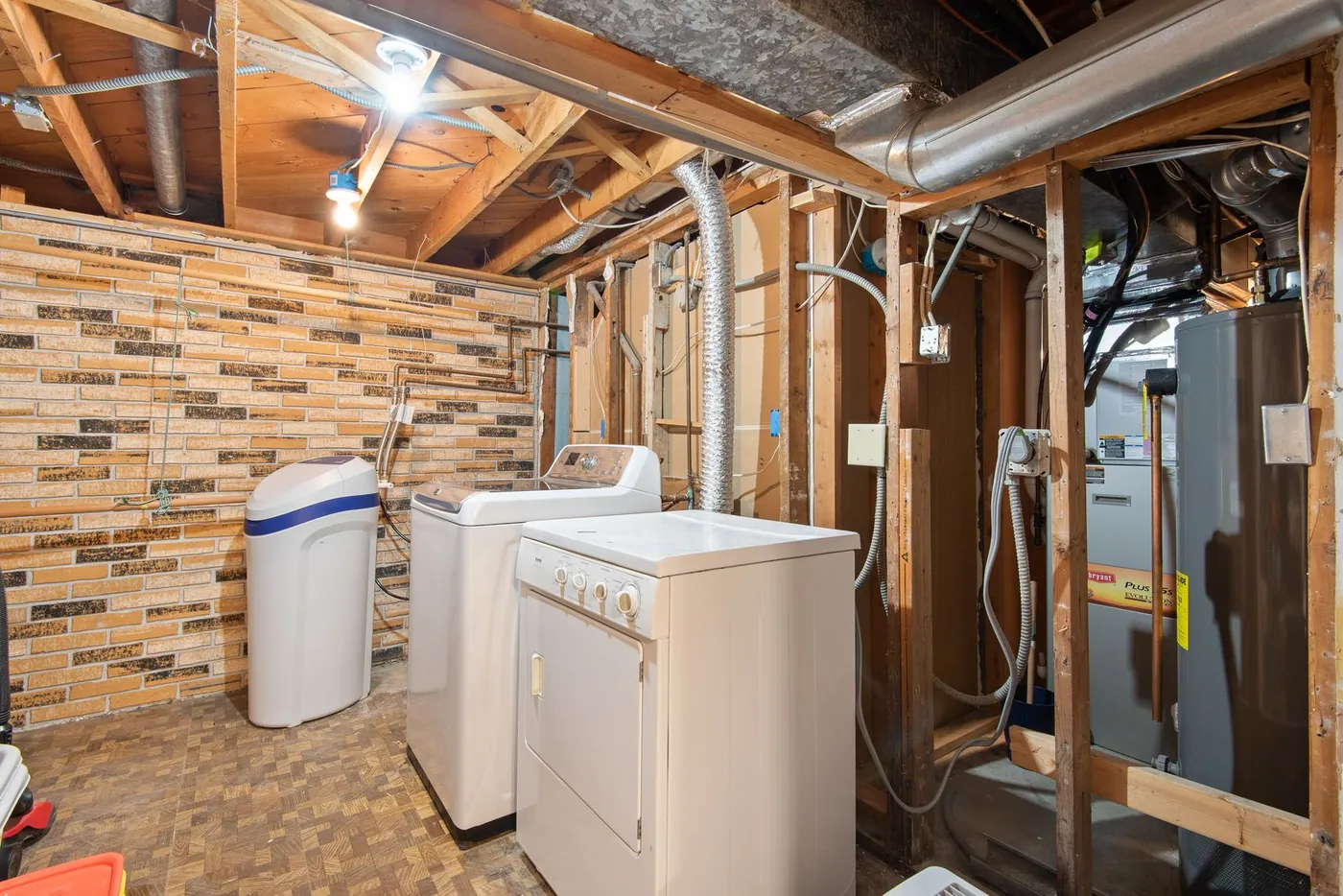
Illustrative photo — a softener installation in a home utility room.
After city work
Why Is My Water Discoloured After City Work?
When the city repairs a main, flushes hydrants or recovers from a supply event, disturbed sediment can reach your taps. Pflugerville lived the large-scale version in March 2026, when breaks in the single raw-water pipeline from Lake Pflugerville led to a mayoral disaster declaration, Stage 3 restrictions and emergency purchases of treated water from Manville WSC.
After any such event: run a cold tap for a few minutes first. If the cold water clears, flush the heater before running hot water hard — sediment pulled into the tank settles there and becomes next year's rumbling.
If discolouration persists at every tap including cold, it's a supply matter for the city. If it's only in the hot water and it lingers, it's your tank asking for a flush and an anode check.
Questions, answered
Pflugerville Water FAQs
The measured hardness figure, the softener question, and the TTHM notice — separated into what's true and what matters.
How hard is the water in Pflugerville, TX?
The City of Pflugerville's own 2024 wholesale water-quality data sheet — the figures behind the water the city buys and distributes — lists hardness at 168 mg/L as CaCO3, about 9.8 grains per gallon. On the USGS scale, 121–180 mg/L is classified as hard water. That's the measured figure for Pflugerville supply; it's hard enough to scale a water heater steadily, which is why maintenance intervals here should be shorter than national guides suggest.
Do I need a water softener for my water heater in Pflugerville?
Need is too strong a word — but at 168 mg/L a softener is the single most effective protection a water heater can get. Softened water stops new scale forming, which extends element life, keeps a tankless exchanger clear, and slows anode consumption. Without one, the alternative is discipline: annual flushing and regular anode checks. A softener treats the whole home's plumbing and fixtures too, not just the heater — weigh it as a house decision, not only a heater one.
Does Pflugerville's TTHM notice affect my water heater?
No established effect on the heater itself. In 2025 the city issued required public notices after trihalomethane (TTHM) results at two monitoring sites came in slightly above the federal standard — 0.084 and 0.082 mg/L against the 0.080 limit. TTHMs are a drinking-water compliance matter: they form when disinfectant reacts with natural organic matter in the supply. The city's own position in those notices is that the water is safe to consume and there is no need to boil it. Your heater's enemies in Pflugerville water are minerals — hardness — not TTHMs.
Pflugerville Water Heater Pros
Hard water is eating your heater slowly.
A flush, an anode check or a tankless descale resets the clock. Ask us which one your unit is due for — we'll date it from the label.
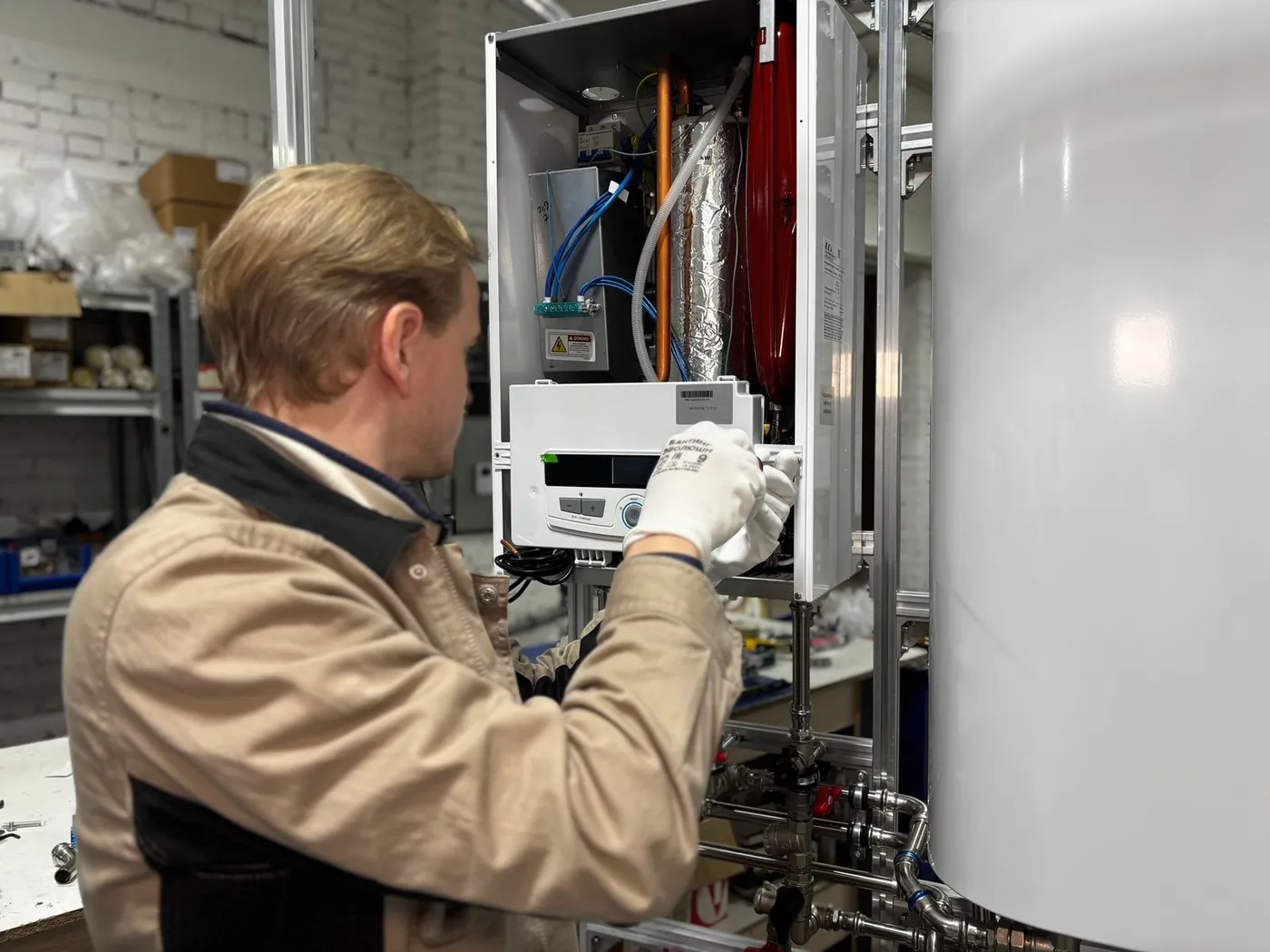
Illustrative photo